
Is Townhome Coverage HO3 or HO6?
It depends on ownership. If an association owns the building structure, you need HO6. If you own the structure outright, it's HO3.
Free to compare

Check your property deed or the HOA agreement before you assume anything. If the association holds title to the building and common areas, and you only own from the drywall in, that's an HO-6 situation, even though the building looks just like a detached house. If your deed shows you own the structure itself, including the roof and exterior walls, you need an HO3. Some townhome communities run either way, so the paperwork matters more than what the place looks like from the street.
Getting HO3 and HO6 mixed up costs you
The wrong policy type can leave the structure uninsured or have you paying for coverage the master policy already provides. Compare quotes built around what your deed actually says you own.
What does an HO-6 actually pay for
An HO-6 policy covers four things. The interior of your unit from the drywall in, meaning cabinets, flooring, fixtures, and any improvements you've made, like a renovated kitchen. Your personal property, so furniture, clothes, electronics. Liability, if someone gets hurt inside your unit or you damage someone else's property. And loss assessment, which pays your share if the HOA bills all owners for a loss the master policy didn't fully cover.
How much interior coverage you need isn't a guess you should make alone. Most HO-6 policies default to a number like $20,000 or $25,000, and for a unit with original builder-grade everything, that might be close to enough. But if you've put in hardwood floors, upgraded appliances, or finished a basement, that default falls short fast. Get a rough cost to rebuild your unit's interior from scratch, fixtures and all, and set your coverage there. Your insurer can help you work out that number, and it's worth doing before a loss, not after.
Loss assessment coverage is the part people don't think about until the HOA letter shows up. Say a fire starts in the building's shared roof and the master policy's limit doesn't cover the full repair. The HOA can split the shortfall across every unit owner as a special assessment, sometimes a few hundred dollars, sometimes tens of thousands. Loss assessment coverage on your HO-6 picks up your share, usually up to a limit you choose, like $1,000 or $50,000. Given that the cost of adding it is small relative to what it protects against, it's worth checking your limit rather than accepting whatever the policy defaults to.
Water from a neighbor's unit is its own question, and the answer depends on where the water started and whose negligence caused it. If a pipe bursts inside the unit above you, the damage to your neighbor's unit is typically their problem, and damage to your unit is typically yours, each covered by your own HO-6. If the water came from a shared pipe in the building's structure, the master policy may be the one that responds. Either way, your HO-6 is what pays to fix your own interior and belongings while the question of who's at fault, if anyone, gets sorted out separately. That's part of why the interior coverage limit matters as much as it does.
What's different about a townhome compared to a condo or a single-family house
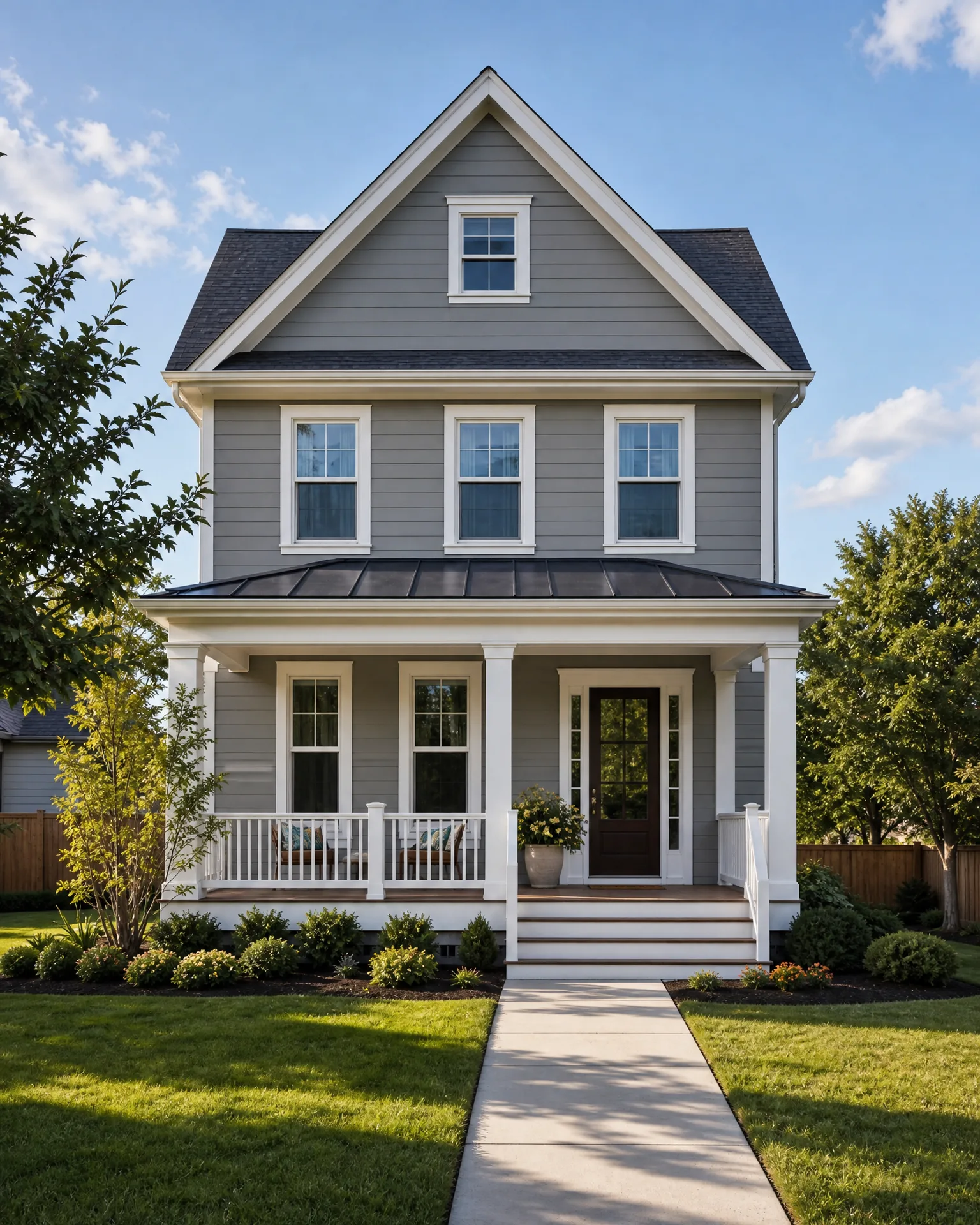
Townhomes sit in an odd spot because they're built attached, like a condo, but a lot of them are deeded like a house. That's why the ownership question matters more here than it does for a detached house, where the answer is always HO3, or a high-rise condo, where it's almost always HO6. A townhome community can go either way. Two buildings that look identical from the street can be insured completely differently depending on how the HOA set up the deeds.
If you're the one with HO3, your policy is doing more work than a condo owner's HO6. You're insuring the roof, the exterior walls, the structure itself, not just the inside. That also means you're carrying the risk the shared walls bring. If a fire starts in your attached neighbor's unit and spreads into yours, your HO3's dwelling coverage pays to rebuild your side of the shared wall. There's no master policy to fall back on. The HOA in an HO3 townhome community usually only insures common areas like a clubhouse or shared landscaping, not the units themselves.
The HOA's governing documents are worth a second read, even after you've confirmed what the deed says. Some HO3 townhome communities still carry a master policy for the exterior of the buildings, with owners responsible only for the interior. That arrangement blurs the line between the two policy types and can mean you need less dwelling coverage than a fully detached house would. The declarations page of the HOA's policy, not just the deed, is what settles how much structure you're actually on the hook to insure yourself.
Attached walls also raise the stakes on liability in a way a detached house doesn't. A tree falling on your roof is your problem alone. A fire that starts in your unit and damages your neighbor's is a liability claim, and it's the kind of thing HO3 and HO6 both cover, but only up to the liability limit you've chosen. Townhome owners on either policy type have a reason to check that limit more carefully than someone in a standalone house might, because there's another unit close enough to be damaged by whatever happens in yours.

Before you request a quote
Pull your deed and the HOA's master policy declarations page. Match what they say you own against the coverage you're about to buy, and check your loss assessment limit while you're at it.


